Why Safety Culture Matters
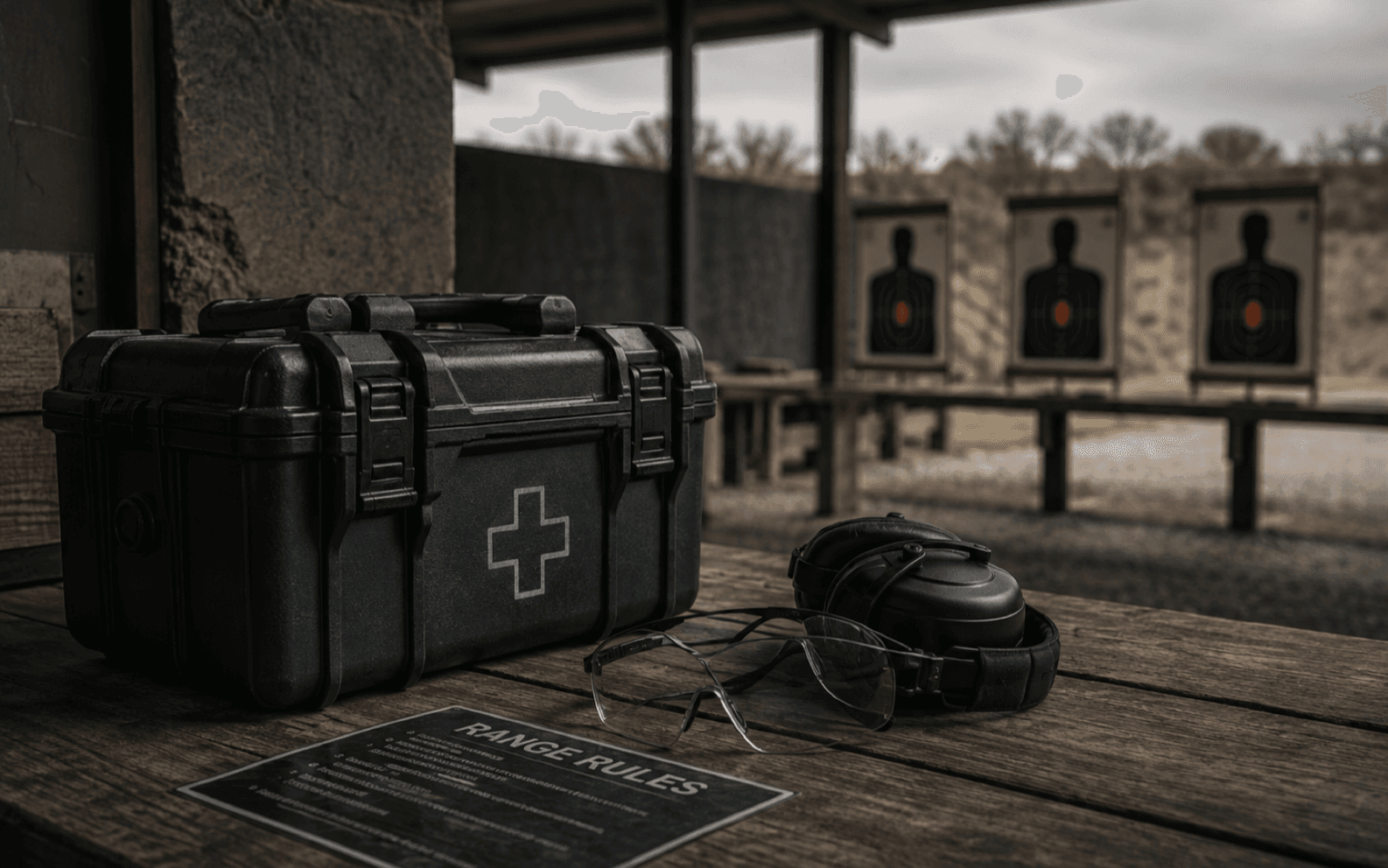
Firearms are inherently dangerous tools. That is their purpose. But a well-run range with a strong safety culture is one of the safest places you can be — safer than a highway, a swimming pool, or even a kitchen. Safety is not about fear; it is about discipline, consistency, and mutual respect.
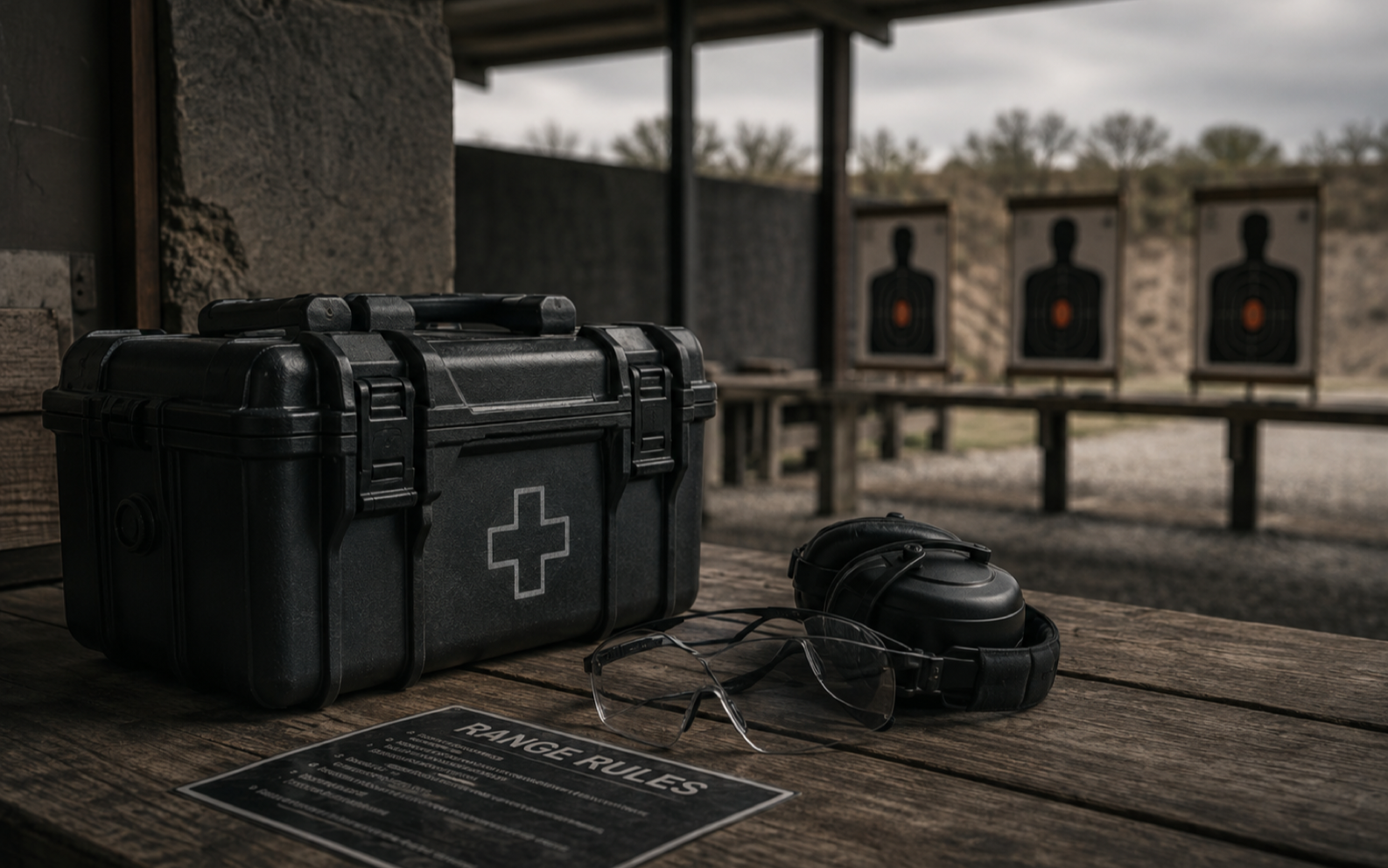
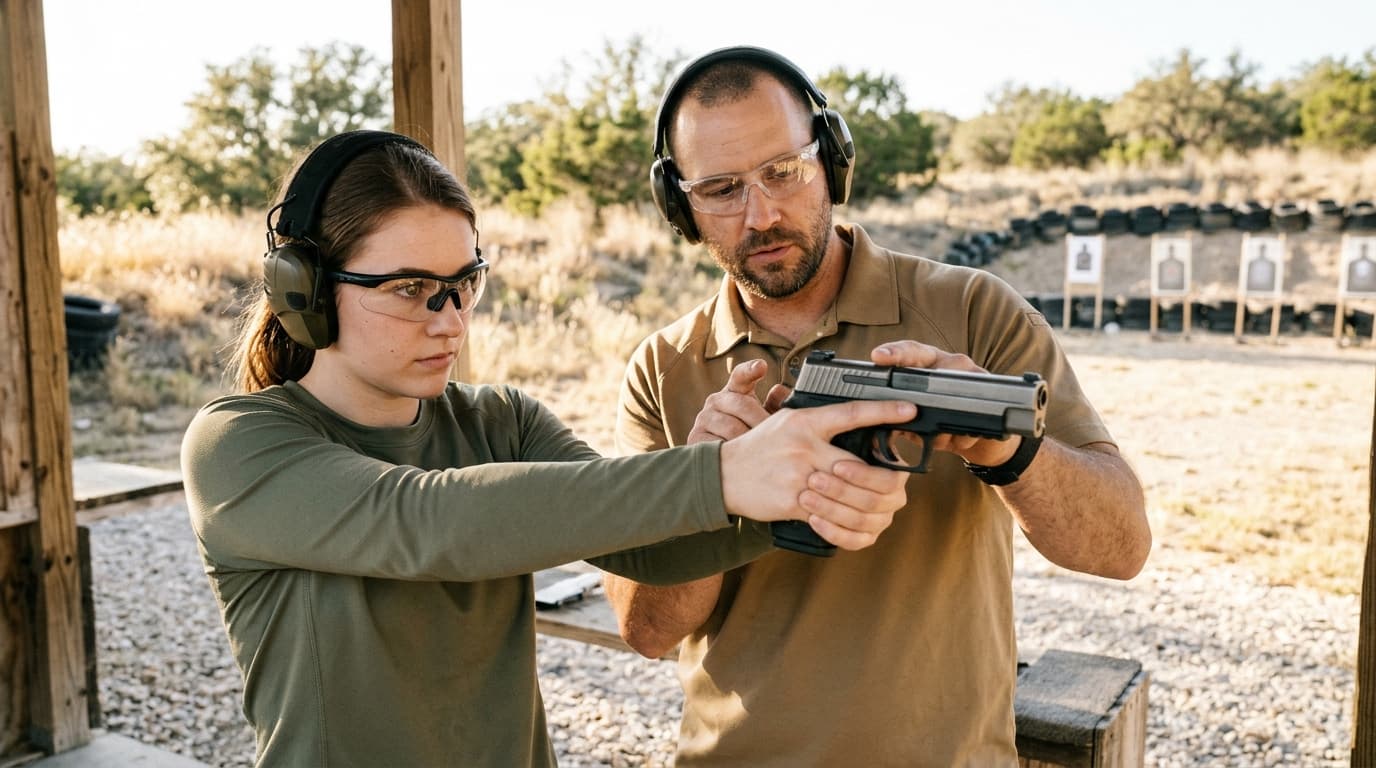
At Genesis Rising, safety is not a section of the class — it is the class. Every session begins and ends with safety. Every drill reinforces safe habits. Every interaction on the range is filtered through the lens of "is this safe?" If the answer is anything other than a confident yes, we stop.
Understanding Range Commands
Range commands are the language of the firing line. They exist to ensure everyone is on the same page at all times. Here are the commands you will hear at any Texas range:
"The Range Is Hot"
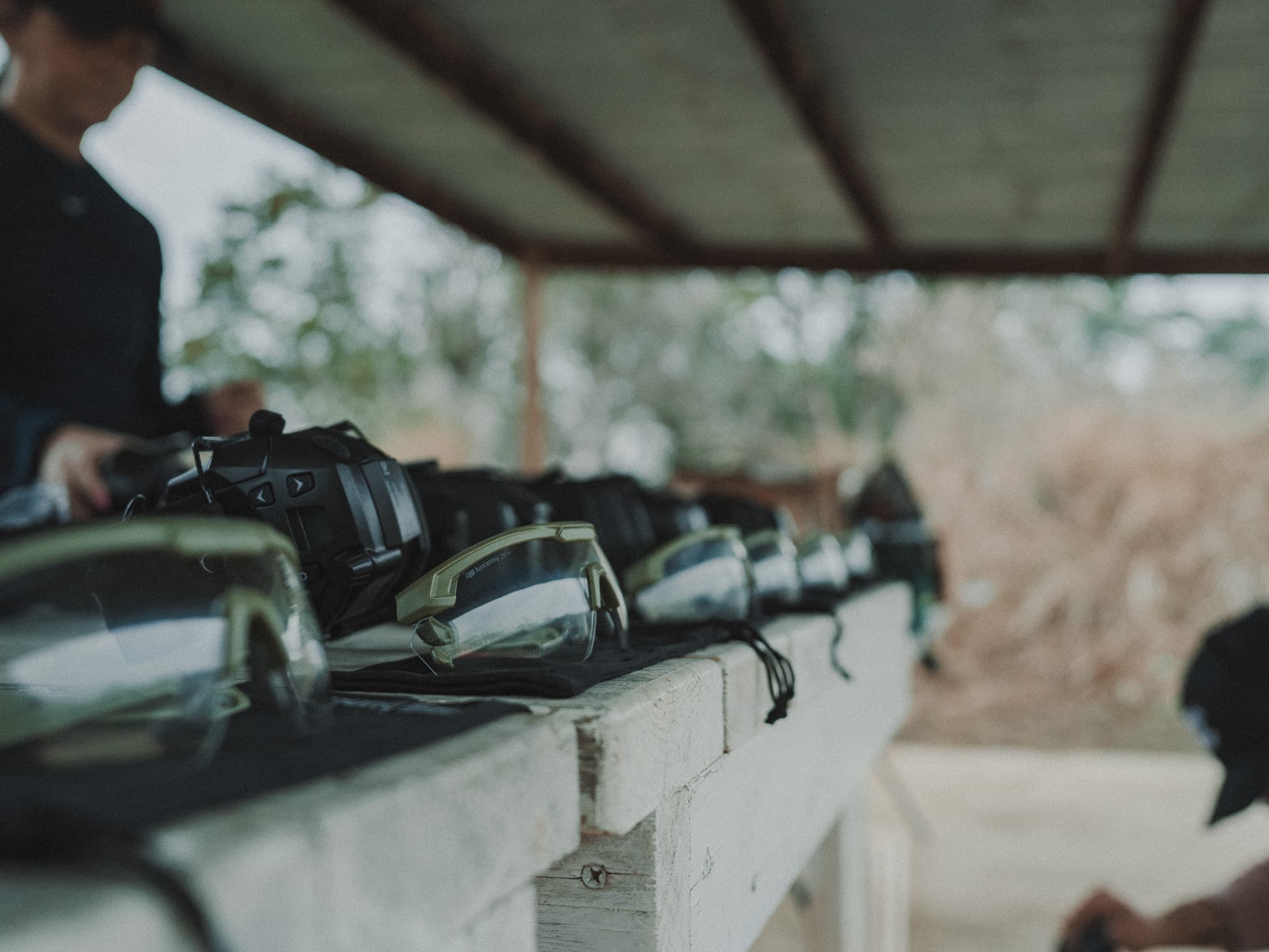
This means the firing line is active. You may handle firearms, load, and fire. Eyes and ears (protection) must be on before this command is given.
"Ceasefire" or "The Range Is Cold"
Immediately stop shooting. Remove your finger from the trigger. Ground your weapon (place it on the bench with the action open and muzzle pointed downrange). Step back from the firing line. Do not touch any firearm for any reason until the range is called hot again.
"Make Ready"
Prepare your firearm for the next drill. Load your magazine, but do not chamber a round until instructed.
"Load and Make Ready"
Insert your magazine, chamber a round, and holster or prepare for the drill. The next command will be to fire.
"Unload and Show Clear"
Remove the magazine, lock the slide to the rear, and show the empty chamber to the range officer. This verifies the firearm is safe before holstering or casing.
If you ever feel unsure about a command, ask. No one on a safe range will criticize you for seeking clarification. It is always better to ask than to assume.
Indoor Range Protocols
Indoor ranges in Texas (common in San Antonio, Austin, and Houston metro areas) have specific considerations:
- Ventilation awareness: Modern indoor ranges have advanced air handling systems, but lead exposure is a concern with prolonged use. Wash your hands and face thoroughly after every indoor session.
- Brass collection: Most indoor ranges retain all brass. Do not collect brass from other lanes or from the floor without permission.
- Target distance: Indoor ranges typically offer 15-25 yard lanes. Practice at multiple distances, but do not shoot at distances where you cannot maintain safe accuracy.
- Ammunition restrictions: Many indoor ranges prohibit steel-core, armor-piercing, incendiary, and tracer rounds. Check before you bring ammunition.
Outdoor Range Protocols
Outdoor ranges in the Texas Hill Country and surrounding areas offer more flexibility but require additional awareness:
- Weather considerations: Texas heat is a real factor. Hydrate aggressively, wear sunscreen, and take shade breaks. Heat exhaustion impairs judgment, and impaired judgment on a firing line is dangerous.
- Backstop awareness: Always verify your backstop (the berm behind your target). Know what is behind the berm. On rural land, be absolutely certain of where your rounds will impact.
- Wildlife: Texas outdoor ranges may have rattlesnakes, fire ants, and other wildlife. Be aware of your environment beyond just the firing line.
- Rapid fire policies: Some outdoor ranges allow rapid fire and movement drills. Confirm the range policy before performing any dynamic shooting.
Handling Malfunctions Safely
Malfunctions happen to every firearm. How you respond determines whether a malfunction remains an inconvenience or becomes a safety incident. The universal malfunction response is:
Tap, Rack, Assess
- Tap: Firmly tap the base of the magazine to ensure it is fully seated.
- Rack: Aggressively rack the slide to clear the chamber and chamber a fresh round.
- Assess: Visually check the ejection port. If the round cleared, you are back in business. If not, perform a more advanced clearance drill.
The critical safety point: during a malfunction, keep the muzzle pointed downrange at all times. Do not turn the firearm sideways, do not look into the muzzle, and do not hand a malfunctioning firearm to someone else. Keep it pointed in a safe direction and work the problem.
Emergency Procedures
While rare, medical and safety emergencies can occur on the range. Here is the protocol:
If Someone Is Injured
- Call "CEASEFIRE" loudly and clearly. All shooting stops immediately.
- Secure all firearms (ground them, actions open).
- Call 911 or direct someone specific to call 911.
- Provide first aid if trained. Apply direct pressure to bleeding wounds. Do not move the injured person unless they are in immediate danger.
- Keep the scene secure until emergency services arrive.
If There Is a Negligent Discharge
- Call ceasefire immediately.
- Check for injuries.
- Determine what happened and ensure the firearm is safe.
- Report the incident to the range officer.
Safety is a team sport. Everyone on the range is a safety officer. If you see something unsafe, you have the right — and the responsibility — to call a ceasefire. No one will fault you for prioritizing safety. It is always the right call.
Genesis Rising maintains the highest safety standards at every session. Our instructors are certified, our protocols are proven, and our community holds each other accountable. That is what makes training with us different.